
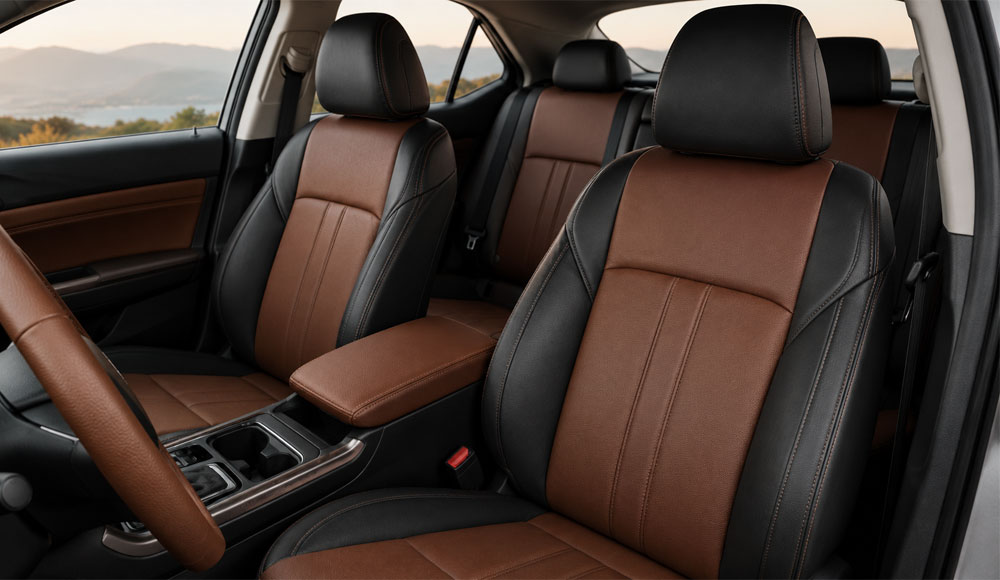
From family SUVs to ride-share fleets and EVs, PU leather car seat covers have become the default upgrade over cloth — delivering a leather look, easy wipe-clean upkeep and animal-free material at a fraction of the cost of genuine hide. This guide explains what makes a quality automotive-grade cover, the specs and compliance that matter, how it compares to other materials, and how to source PU leather auto car seat covers with confidence.
| // Quick Answer | |
|---|---|
| What it is | Polyurethane-coated fabric, engineered to automotive grade and fitted as seat covers, trims and accessories. |
| Key specs | 0.8–2.0 mm thickness; Martindale abrasion above 30,000 cycles; UV-stable; flame-retardant. |
| Compliance | FMVSS 302 (US), ISO 3795 (international) and GB 8410 (China) flammability. |
| Vegan | Yes — 100% PU contains no animal hide. |
| Best for | Families, ride-share and fleets wanting upscale looks with low maintenance. |
Why PU Leather Is Used for Car Seats
PU synthetic leather has become a cornerstone of modern car interiors because it is engineered for the conditions a cabin actually faces. Unlike a natural hide, it is produced to deliver consistent quality and performance, which is why it appears across seats, headrests, door panels and armrests. The reasons it suits automotive seat covers are practical:
- Abrasion resistance — a protective topcoat shrugs off the daily friction of seatbelts, keys, denim and pets.
- UV stability — quality automotive grades resist the fading and surface cracking that sunlight causes in lower-grade materials.
- Water & stain resistance — spills, sunscreen and coffee wipe away instead of soaking in.
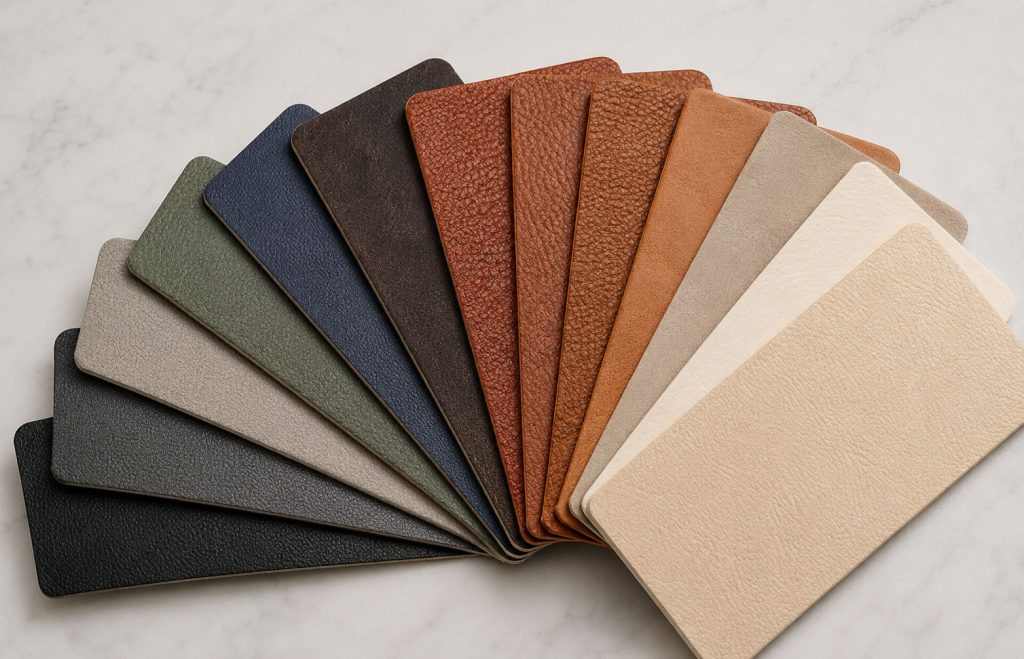
- Design freedom — any color, grain or perforation pattern, matched precisely across a full production run.
- Lighter & vegan — lower weight than hide and a fully animal-free material, increasingly favored by EV makers.
PU Leather Car Seat Covers: What to Look For
Quality varies enormously, so spec the material before you commit. These are the numbers that separate a durable automotive cover from a budget one:
| Total thickness | 0.8–2.0mm |
| Martindale rubs | 30,000+ |
| UV / fade test | SAE J2412 |
| Flammability | FMVSS 302 |
A few practical notes on each:
- Thickness. Most automotive PU runs 0.8–2.0 mm. Thicker 1.5–2.0 mm material adds durability, sound insulation and puncture resistance for high-contact seats; thinner grades suit lighter trim.
- Abrasion. Ask for a Martindale rub-test report — aim above 30,000 cycles for seating — plus Taber values for commercial fleets.
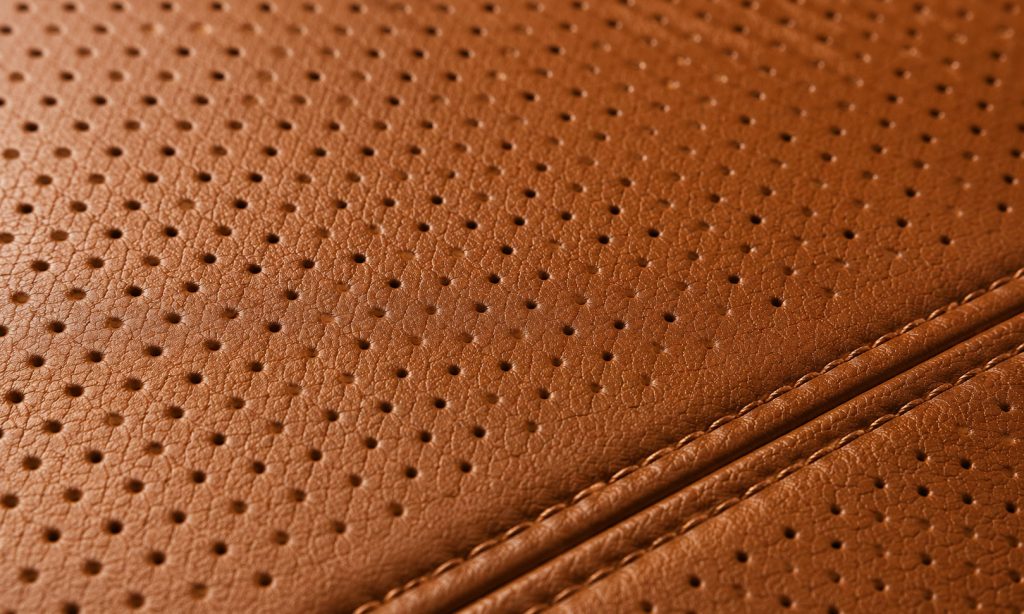
- Perforation. For ventilated or heated seats and hot climates, choose a perforated pu leather car seat cover so air moves and the surface runs cooler.
- Fit. Decide between universal covers and custom, vehicle-specific patterns; custom fit looks OEM and protects more of the seat.
PU Leather vs Genuine, PVC & Microfiber for Car Interiors
An honest comparison helps you choose the right material for the vehicle and climate rather than over-promising one option:
| PU Leather | PU Leather | PVC / Vinyl | Microfiber | |
|---|---|---|---|---|
| Relative cost | Low–mid | High | Low | Mid–high |
| Abrasion resistance | High | High | Very high | Moderate |
| UV / fade resistance | High | Moderate | High | Moderate |
| Breathability | Low (perf. helps) | High | Low | High |
| Maintenance | Wipe clean | Needs conditioning | Wipe clean | Gentle care |
| Vegan | Yes | No | Yes | Yes |
| Best for | Daily / fleet | Luxury | Heavy-duty | Sport / grip |
Beyond Seats: Steering Wheel Covers & Armrest Mats
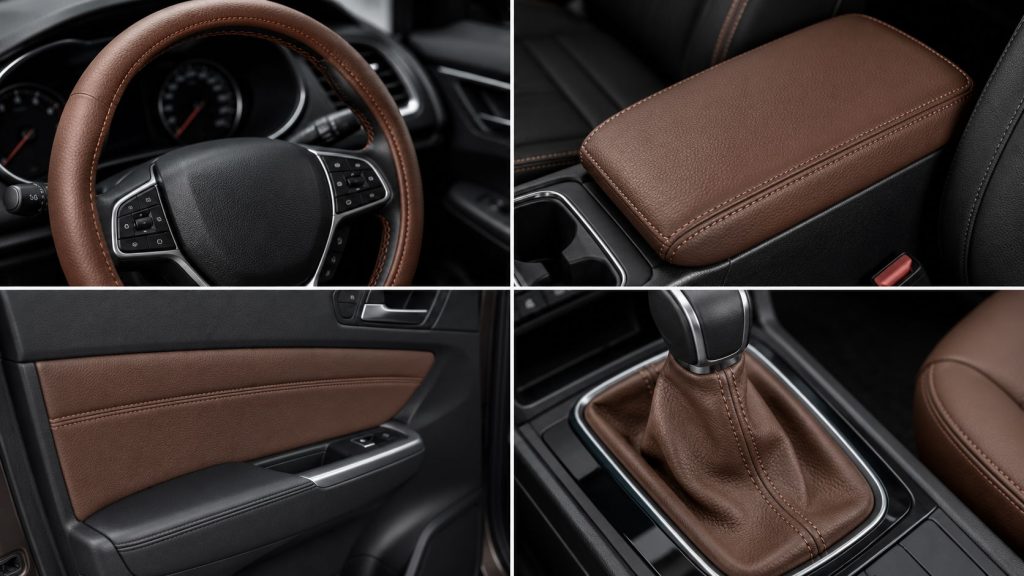
Seat covers are the centerpiece, but buyers increasingly want a matched interior set. The same automotive-grade material extends naturally to high-touch accessories:
PU leather steering wheel covers
A car steering wheel cover of PU leather is one of the most demanding accessory applications: it sits under constant grip, hand oils and sun. Automotive PU suits it well thanks to abrasion resistance, a consistent hand-feel and tolerance of cabin heat. Perforated or embossed grains add grip without the conditioning a leather wrap needs.
Multifunctional armrest box mats
A multifunctional PU leather car armrest box mat protects the center console from wear and scratches, adds a soft elbow rest, and often doubles as an anti-slip surface or storage liner. Because PU wipes clean and resists spills, it is ideal for a part of the cabin that sees drinks, phones and keys all day.
Rounding out a full interior set, the same material is used for door-panel inserts, gear-shift boots, headrest trims and dashboard wraps — all colour-matched to the seats.
Compliance & Safety
Automotive interiors are safety-regulated, so compliance is not optional. The core requirements for any cabin material — including seat covers and trim — are:
- Flammability. Interior materials such as seat cushions, backs, armrests and trim must meet horizontal-burn standards: FMVSS 302 in the US, ISO 3795 internationally and GB 8410 in China, which cap the burn rate (FMVSS 302 allows no more than 102 mm/min).
- Cabin air quality. Low-VOC, low-odor material matters in a sealed, sun-heated cabin; water-based and solvent-free PU helps here.
- Chemical & quality certification. Look for REACH and OEKO-TEX compliance plus SGS and RoHS testing, with documented abrasion, colorfastness (Crockmeter) and UV results.
Care & Maintenance
Set honest expectations with end customers: PU leather is a coated material, so simple, correct care keeps it looking good for years.
- Wipe regularly with a soft cloth and a mild water-and-detergent solution; blot, don’t soak.
- Avoid harsh solvents, ammonia, bleach and alcohol-based cleaners, which break down the polyurethane coating and cause cracking.
- Use a silicone-free conditioner every 6–12 months in dry or sunny regions to keep the surface supple.
- Apply a UV-protective spray made for synthetic leather to slow sun damage on parked vehicles.
Sourcing PU Leather Auto Car Seat Covers
Buyers sourcing pu leather auto car seat covers are drawing on the world’s largest synthetic leather industry — China is the leading global producer, with deep automotive-grade capacity and a wide range of grades and finishes. To source well:
- Verify certification. Prioritize REACH-, OEKO-TEX-, SGS- and RoHS-backed material with flammability test reports.
- Confirm performance. Request thickness, Martindale abrasion, UV and colorfastness data for the exact article.
- Sample first. Test color, hand-feel and fit on real samples before committing to bulk or OEM runs.
- Plan customization. Color, grain, perforation and backing can be tailored to a brand or vehicle program.
Frequently Asked Questions
Are PU leather car seat covers good?
Yes. Automotive-grade covers offer strong abrasion and UV resistance, easy wipe-clean care, a wide color range and a vegan material at a lower cost than genuine leather. Genuine leather breathes better, but ventilated or perforated PU largely offsets this in modern cabins.
What thickness should automotive PU leather be?
Most automotive-grade PU runs 0.8–2.0 mm. Thicker 1.5–2.0 mm material gives better durability, sound insulation and puncture resistance, while thinner grades suit lighter trim. Look for Martindale abrasion above 30,000 cycles for seating.
Do PU leather car seat covers need to be flame retardant?
Interior materials must meet flammability standards such as FMVSS 302 (US), ISO 3795 (international) and GB 8410 (China), which cap the horizontal burn rate. Reputable PU leather for car seats is produced to pass these tests.
How do you clean PU leather car seat covers?
Wipe with a soft cloth and a mild water-and-detergent solution, then dry. Avoid harsh solvents, ammonia, bleach and alcohol-based cleaners. A silicone-free conditioner every 6–12 months and a UV-protective spray help in hot climates.
Where can I source PU leather auto car seat covers?
China is the world’s largest producer of automotive synthetic leather. Source from manufacturers that supply certified material (REACH, OEKO-TEX, SGS, RoHS) and provide abrasion, UV and flammability test reports, with samples for evaluation before bulk orders.