
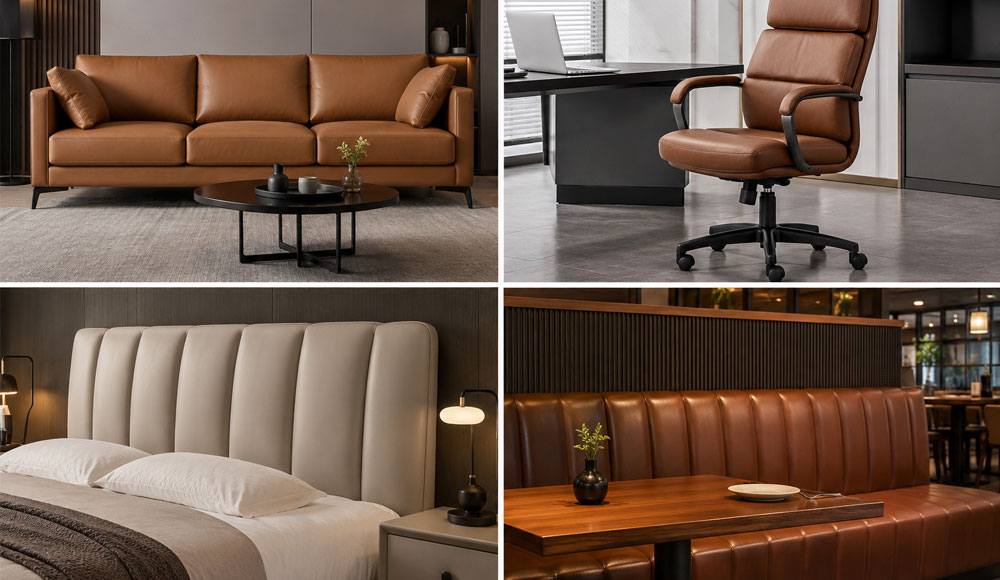
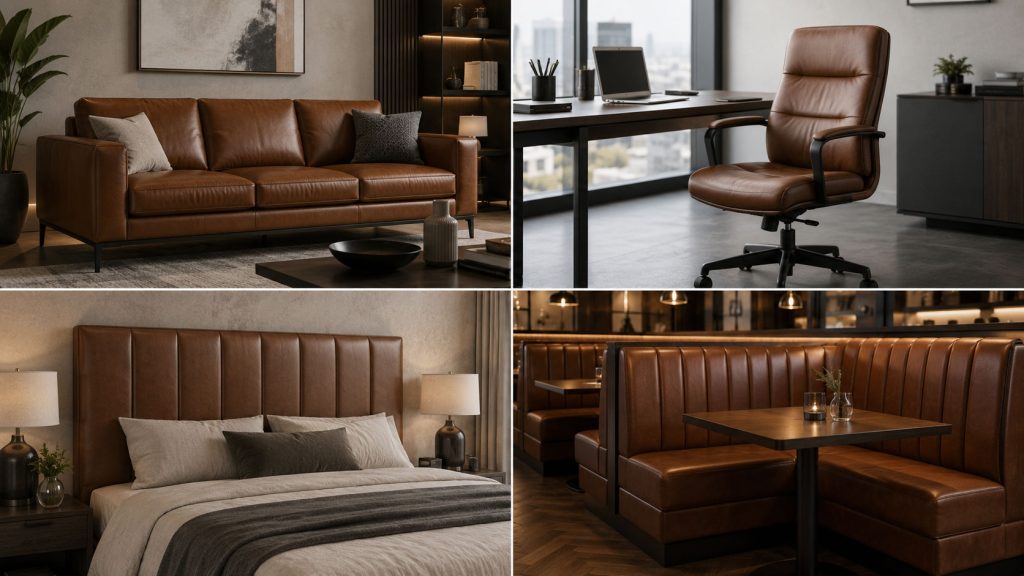
PU leather furniture has become a default choice for sofas, office chairs, headboards and contract seating worldwide — offering the look of leather at a far lower cost, with consistent quality that suits high-volume production. This guide explains what PU leather furniture is, how it is made, why it dominates modern furniture manufacturing, and what to look for when sourcing PU furniture leather from China.
| // Quick Answer | |
|---|---|
| What it is | A synthetic upholstery material: polyurethane coating bonded to a fabric backing, embossed to mimic leather grain. |
| Vegan | Yes — 100% PU leather contains no animal hide. |
| Lifespan | ~2–5 years for standard grades; longer for high-grade polycarbonate-resin material. |
| Best for | Cost-conscious, design-led and high-volume furniture programs. |
| Top benefit | Uniform color and grain across full rolls — no natural hide defects or waste. |
What Is PU Leather Furniture?
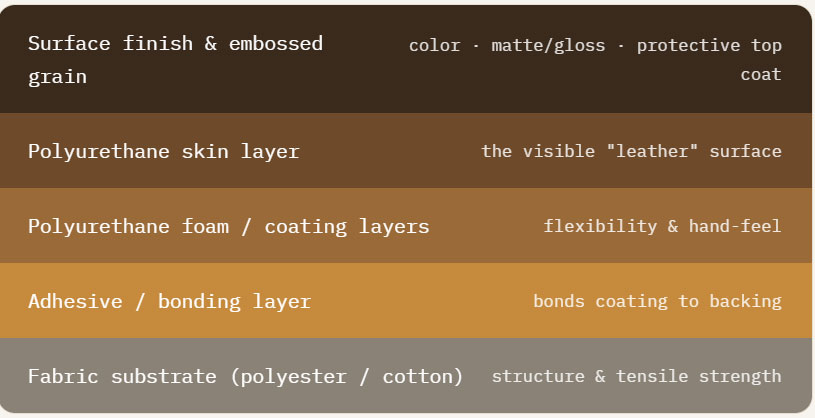
PU leather furniture is any sofa, chair or upholstered piece covered in polyurethane (PU) synthetic leather. The material is built by coating a woven or non-woven fabric backing — usually polyester, cotton or a blend — with one or more thin layers of polyurethane, then embossing the surface to imitate the grain of genuine leather. Because the surface is plastic rather than hide, 100% PU leather contains no animal product, which is why it is widely marketed as vegan leather.
So what is PU leather furniture compared with the alternatives? It sits between genuine leather and cheaper or lower-performing substitutes:
- Genuine leather — a single, natural hide material; the most durable and breathable, but the most expensive.
- PU leather — fully synthetic coating on fabric; affordable, uniform and vegan.
- PVC (vinyl) leather — tougher and very water-resistant, but stiffer and less breathable; common on outdoor and heavy-duty seating.
- Bonded leather — leather scraps glued and coated; looks like leather but is prone to peeling, and is generally considered the weakest option for furniture.
How PU Furniture Leather Is Made
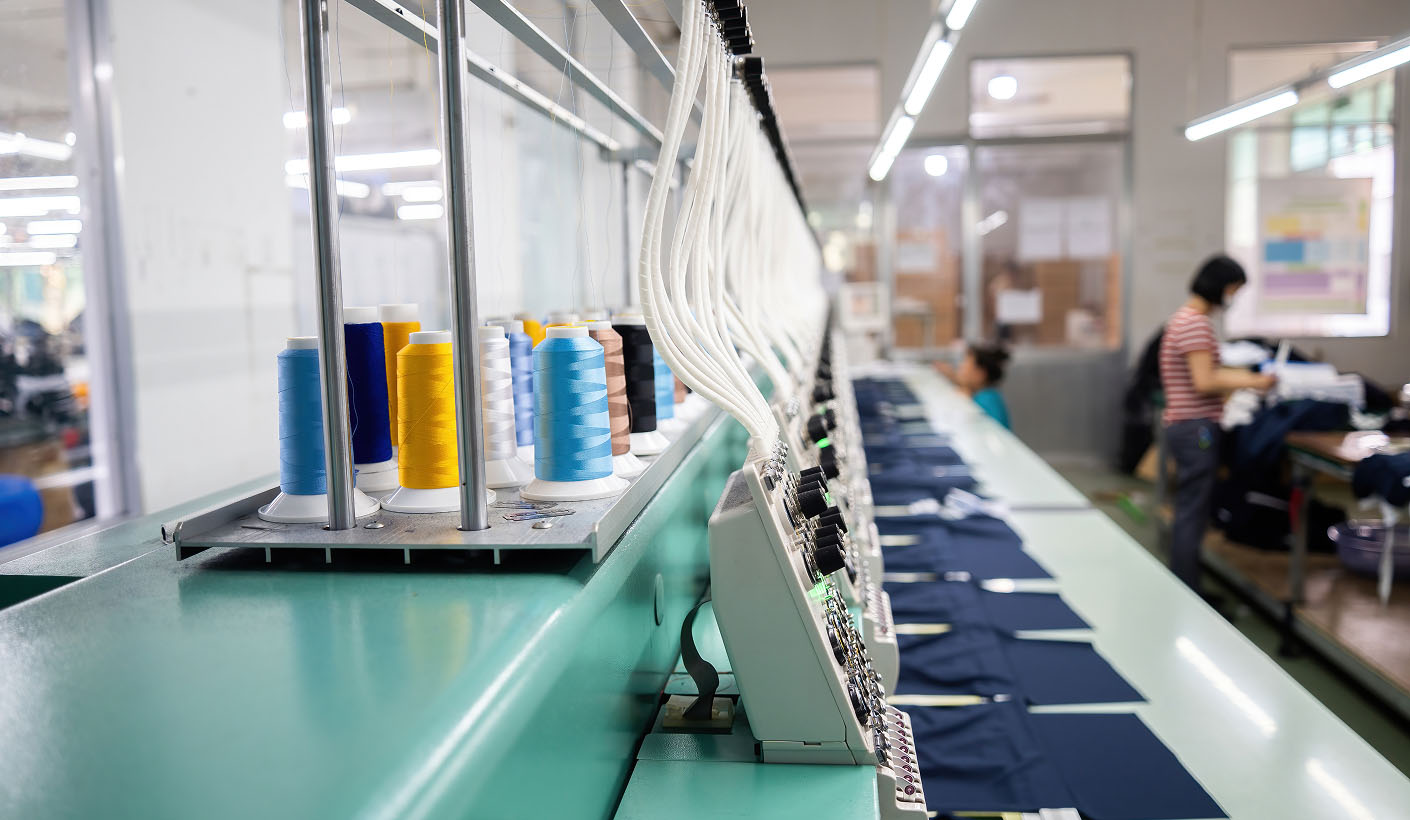
Understanding production helps buyers judge quality. Most PU furniture leather is made in four broad stages:
- Substrate selection. A base fabric (polyester, cotton, or a microfiber non-woven) is pre-treated to improve adhesion.
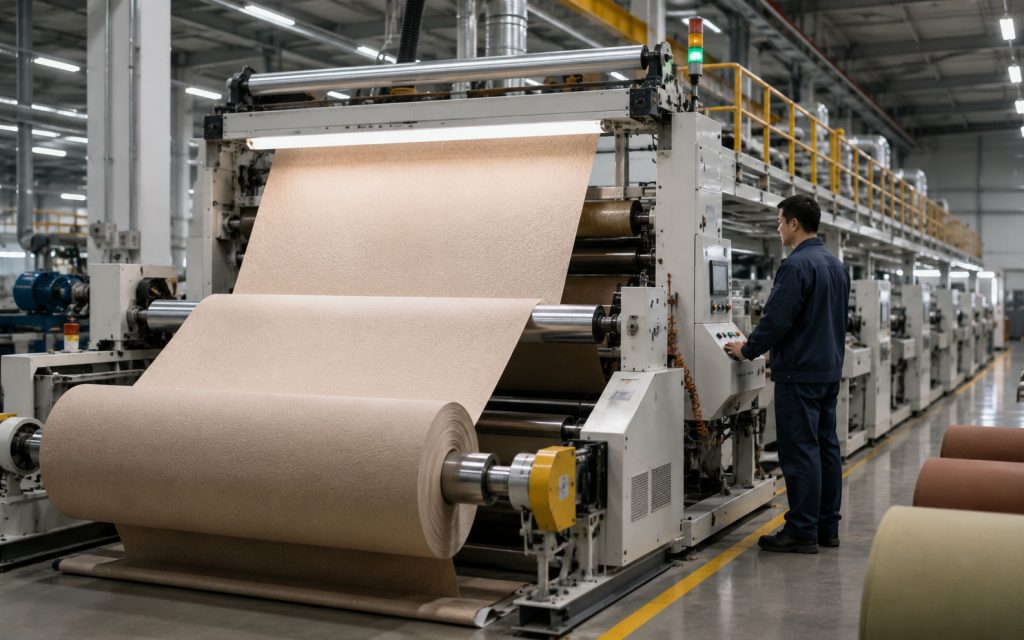
- Polyurethane coating. Liquid PU is applied in one or more layers. In the widely used “wet” process a coagulated base layer is built up; the “dry” process coats PU directly onto the face for higher strength.
- Curing. Controlled heat bonds the coating to the backing and sets the film.
- Embossing & finishing. Grain patterns, color, matte/gloss top coats and protective treatments are added.
The single biggest quality factor is the resin system. Polycarbonate resins offer the best resistance to heat, light and humidity and are suited to high-traffic commercial upholstery; polyether resins cover most commercial uses; polyester resins are lowest-cost and best kept to low-contact items such as headboards and decorative panels.
PU Leather vs Genuine Leather, PVC & Bonded Leather
An honest comparison helps you specify the right material rather than oversell one. Here is how the common upholstery materials stack up for furniture:
| PU Leather | Genuine Leather | PVC / Vinyl | Bonded Leather | |
|---|---|---|---|---|
| Relative cost | Low | High | Low | Low |
| Typical lifespan | ~2–5 yrs (more if high-grade) | 20+ yrs | 5–10 yrs | 1–3 yrs |
| Breathability | Low | High | Low | Low |
| Color / finish range | Very wide | Limited | Wide | Wide |
| Consistency | Uniform rolls | Natural variation | Uniform | Uniform |
| Maintenance | Wipe clean | Needs conditioning | Wipe clean | Wipe clean |
| Vegan | Yes (100% PU) | No | Yes | No |
Benefits of PU Leather in Furniture Manufacturing
From a production standpoint, the benefits of PU leather in furniture manufacturing go well beyond price. These are the advantages that matter on a real factory floor:
- Lower, predictable cost:PU leather costs a fraction of genuine hide and is priced by the roll, making bills of materials easy to forecast at scale.
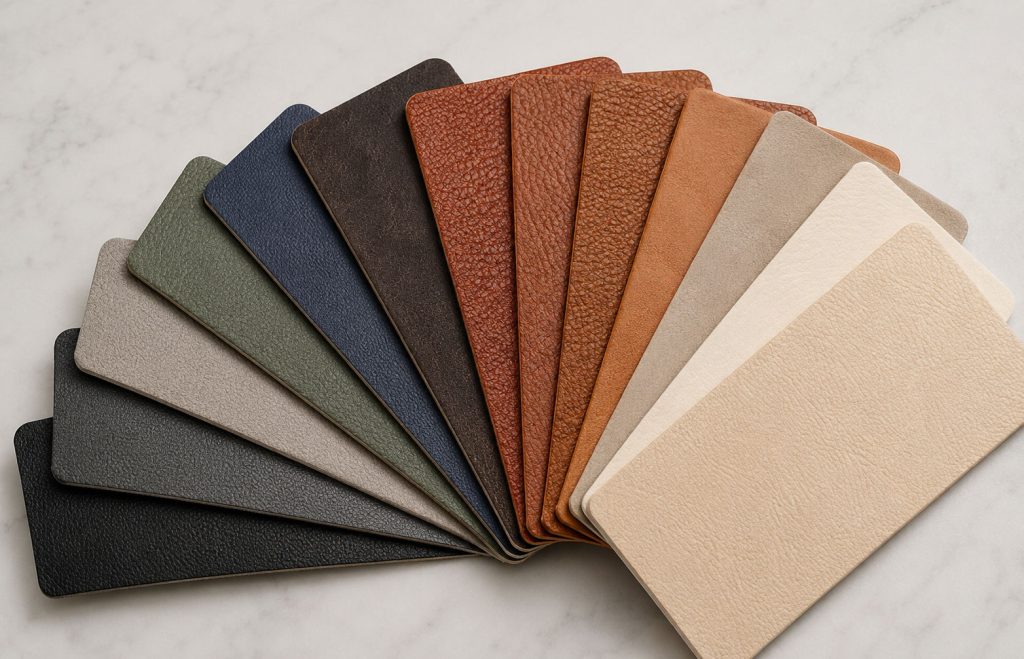
- Uniform, defect-free rolls:Unlike natural hides with scars and shape limits, PU comes in consistent-width rolls with even color and grain — higher cutting yield, less waste.
- Wide design flexibility:Hundreds of colors, grains and matte-to-gloss finishes, plus fast custom matching — ideal for seasonal ranges and brand-specific looks.
Easy maintenance for - end users:The sealed surface wipes clean and resists spills, a strong selling point for family sofas, offices and hospitality seating.
Water & stain - resistance:The polyurethane skin repels liquids better than unfinished leather, supporting durability claims in high-use environments.
- Lighter weight:PU upholstery is lighter than hide, trimming furniture weight and lowering freight costs on export shipments.
- Vegan & on-trend:An animal-free material answers rising demand for cruelty-free furniture in European and North American markets.
- Simpler compliance:Reputable PU can be supplied REACH- and OEKO-TEX-compliant, and water-based grades reduce VOCs — easing import into regulated markets.
Choosing the Right PU Leather Grade for Furniture
Not all PU furniture leather is equal, and the gap between a budget article and a commercial-grade one is large. When you request samples, evaluate:
- Resin system — polycarbonate for heavy daily and commercial use; polyether for general use; polyester for low-contact items only.
- Coating thickness & bonding — a thicker, well-adhered coating resists the cracking and peeling that cause early failure.
- Abrasion rating — ask for rub-test (e.g. Martindale) results to confirm the material suits the seating’s traffic level.
- Backing & finish — fabric weight, stretch and the protective top coat all affect how the piece wears.
Set end-user expectations honestly: PU leather is a coated material, so even good grades benefit from care. A wipe with mild soap and water keeps it clean — but harsh solvents and oil- or wax-based “leather” conditioners will degrade the polyurethane and should be avoided.
Why Brands Source China Furniture PU Leather
When brands and importers look for China furniture PU leather, they are drawing on the world’s largest synthetic leather industry. China is the leading global producer of synthetic leather, and PU — the type most used in furniture — accounts for over half of synthetic leather output worldwide. Established production clusters in Guangdong (close to the Foshan furniture hub), Zhejiang and Fujian give buyers an unusually deep supplier base.
The practical reasons to source furniture PU leather from China are consistent across buyers:
- Capacity & range — from economy articles to commercial-grade and microfiber PU, in one supply chain.
- Cost competitiveness — scale and local raw-material supply keep wholesale pricing keen.
- Certification — leading factories supply REACH-, RoHS- and OEKO-TEX-compliant material for Europe and North America.
- Customization & OEM — color, grain, thickness and backing tailored to a brand’s specification.
The key is supplier selection: prioritize manufacturers that provide material certifications, consistent batch-to-batch quality, and samples for testing before committing to bulk orders.
Sustainability & Compliance
PU leather is honest about what it is: a petroleum-derived plastic coating, not a natural material. But within synthetic options it has real advantages, and the industry is moving fast on sustainability. Conventional “wet” PU production uses the solvent DMF, which raises worker-safety and emissions concerns; water-based and solvent-free PU largely remove that solvent and cut volatile organic compounds, which is why European REACH rules are pushing the market toward these grades. PU also avoids the chlorides associated with PVC.
For buyers, the takeaway is simple: ask for documented compliance. Material that is REACH-compliant and certified to OEKO-TEX standards — ideally produced with water-based or solvent-free PU — gives importers defensible assurance on chemical safety without overstating environmental claims.
Frequently Asked Questions
Is PU leather furniture real leather?
No. PU leather furniture is upholstered with a synthetic material — polyurethane coated onto a fabric backing and embossed to look like leather. It contains no animal hide, so 100% PU leather is also a vegan material.
How long does PU leather furniture last?
It depends on quality. Standard PU leather furniture typically lasts about 2–5 years, while higher-grade material built on polycarbonate resin with a thicker, well-bonded coating performs longer in everyday and commercial use.
What are the benefits of PU leather in furniture manufacturing?
Lower and more predictable cost, uniform color and grain across full rolls with no natural hide defects, a very wide range of colors and finishes, easy maintenance, water and stain resistance, lighter weight, and an animal-free material that supports modern brand positioning.
Is China furniture PU leather good quality?
China is the world’s largest producer of synthetic leather and offers PU furniture leather across the full quality range. Request samples and confirm certifications such as REACH and OEKO-TEX to ensure consistent, compliant material.
How do you clean PU leather furniture?
Wipe it with a soft cloth dampened with water and mild soap. Avoid harsh solvents, abrasive cleaners and wax- or oil-based leather conditioners, which break down the polyurethane coating over time.